
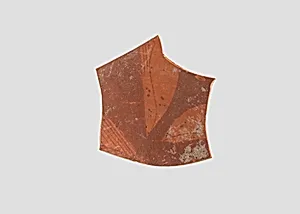
Sherd
Unknown Artist
ca. 1st century CE
Medium
Ceramic
Dimensions
2 3/16 × 1 15/16 × 1/8 in. (5.6 × 5 × 0.3 cm)
Classification
Ceramics-Vessels
Culture & Period
Nabataean · Nabataean
Department
Ancient Near Eastern Art
Museum
Metropolitan Museum of Art, New York, NY
Credit
Gift of H. Dunscombe Colt, 1952
Accession Number
52.129.4
Rights
Public Domain
Art Historical Context
This delicate ceramic sherd, dating to around the 1st century, offers a glimpse into the daily life of the Nabataean, an ancient Arab kingdom renowned for its thriving caravan trade routes across the deserts of modern-day Jordan and surrounding regions. Measuring just 2 3/16 × 1 15/16 × 1/8 inches, this thin fragment likely comes from a larger vessel used for storage, transport, or serving—common in Nabataean households and commerce. As part of the Metropolitan Museum Art's Ancient Near Eastern collection, gifted by H. Dunscombe Colt in 1952, it exemplifies the practical artistry of a culture at its peak before Roman annexation in 106 CE. Nabataean ceramics like this sherd highlight the ingenuity of their potters, who mastered wheel-throwing techniques to produce lightweight, durable wares suited to nomadic trade. Though incomplete, such fragments are invaluable to archaeologists, piecing together the shapes, styles, and functions of everyday objects from Petra, the Nabataeans' rock-carved capital. This sherd underscores their cultural blend of local traditions and influences from Hellenistic and Parthian worlds, reflecting a prosperous society fueled by incense, spices, and silk. Visiting this piece invites wonder at how a simple shard preserves echoes of ancient innovation and resilience.