
Shield
Unknown Artist
19th century
Medium
Hide, lacquer, gold, copper alloy
Dimensions
Diam. 21 1/4 in. (54 cm)
Classification
Shields
Culture
Indian
Department
Arms and Armor
Museum
Metropolitan Museum of Art, New York, NY
Credit
Bequest of George C. Stone, 1935
Accession Number
36.25.585
Rights
Public Domain
Art Historical Context
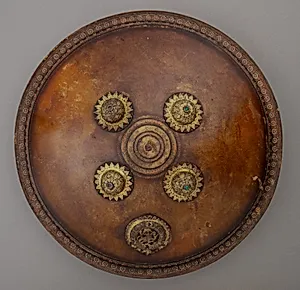
This elegant 19th-century Indian, known as a *dhal*, exemplifies the fusion of functionality and artistry in South Asian arms and armor. Crafted from a sturdy hide base—likely rhinoceros or buffalo skin—for durability in battle or ceremonial use, it measures 21¼ inches (54 cm) in diameter, a standard size for handheld defense. The surface is coated in lacquer for weather resistance and shine, then embellished with luxurious gold and alloy elements, creating a visually striking piece that would have gleamed on the battlefield or in royal processions. In 19th-century India, amid the shifting dynamics of Mughal decline and British colonial expansion, such shields were vital for warriors, including Rajput horsemen and Sikh soldiers. They offered protection against swords and arrows while serving as status symbols; the opulent metalwork, often featuring intricate chasing or repoussé designs (though specifics here are undocumented), reflected the owner's wealth and prestige. Lacquering, a technique rooted in ancient Indian craftsmanship, not only preserved the hide but enhanced its aesthetic appeal, blending practicality with ornamental splendor. Now part of the Metropolitan Museum of Art's collection through the bequest of George C. Stone in 1935, this shield invites us to appreciate how Indian artisans transformed tools of war into objects of beauty, bridging history and high craft.