
Shield
Unknown Artist
ca. 1550
Medium
Steel, gold, brass
Dimensions
Diam. 20 3/4 in. (52.7 cm); Wt. 9 lb. 8 oz. (4309.13 kg)
Classification
Shields
Culture
German, Augsburg
Department
Arms and Armor
Museum
Metropolitan Museum of Art, New York, NY
Credit
Bashford Dean Memorial Collection, Funds from various donors, 1929
Accession Number
29.158.582
Rights
Public Domain
Art Historical Context
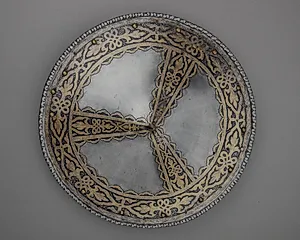
This magnificent steel shield, crafted around 1550 in Augsburg, Germany—a renowned center for Renaissance metalworking—exemplifies the artistry of 16th-century arms and armor. Measuring 20¾ inches in diameter and weighing a substantial 9 pounds 8 ounces, it was forged from durable steel, enhanced with luxurious gold and brass accents. These precious metals were likely applied through gilding, emb, or damascening techniques, transforming a functional defensive piece into a display of opulence and skill. In the turbulent era of the Reformation and Habsburg wars, Augsburg's workshops produced elite armor for nobility and mercenaries, blending utility with parade-worthy splendor. Shields like this protected pikemen or swordsmen in battle or tournaments, their rounded form ideal for deflecting blows while allowing mobility. The integration of gold and brass not only signified wealth and status but also showcased the precision of German craftsmen, who rivaled Italian masters in ornamental metalwork. Acquired through the Bashford Dean Memorial Collection at The Metropolitan Museum of Art, this shield invites us to ponder the fusion of warfare and artistry. Imagine it gleaming under tournament sun, a testament to Augsburg's golden age of innovation in the Arms and Armor tradition.