
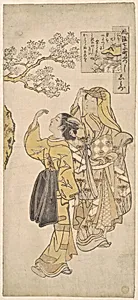
風流七小町 しみず|Shimizu Temple
ca. 1765
Medium
Woodblock print; ink and color on paper; Benizuri-e; small print (hosoban)
Dimensions
12 7/32 x 5 1/2 in. (31.1 x 14.0 cm)
Classification
Prints
Culture & Period
Japan · Edo period (1615–1868)
Department
Asian Art
Museum
Metropolitan Museum of Art, New York, NY
Credit
The Francis Lathrop Collection, Purchase, Frederick C. Hewitt Fund, 1911
Accession Number
JP699
Rights
Public Domain
Tags
Art Historical Context
Suzuki Harunobu *Fūryū Shichi Komachi: Shimizu*ca. 1765) a delicate woodblock print from Japan's Edo period, exemplifying ukiyo-e tradition capturing fleeting beauty. Thisizuri-e—a " print" technique using limited, primarily pink safflower dye (beni alongside ink—marks an innovation in color printing. as a narrow hosoban (just 5½ wide), it was affordable and intimate, perfect for urban collectors in bustling Edo (modern Tokyo). The title evokes the "Stylish Seven Beauties a popular series reimagining legendary courtesans like Ono no Kom in contemporary settings. Here, elegant women gather at Shimizu Temple, framed by trees, blending serene nature with feminine grace. Harunobu, a pioneer of full-color nishiki-e prints, elevated bijin-ga (pictures of beautiful women) with his refined lines and subtle shading, influencing generations of printmakers. Held in the Metropolitan Museum of Art's Asian Art collection, this work highlights Edo Japan's vibrant print culture, where art democratized beauty for everyday viewers. Its small scale invites close admiration, revealing Harunobu's mastery of light, texture, and poised figures amid temple tranquility.
About the Artist
Suzuki Harunobu · 1725–1770
Suzuki Harunobu (c. 1725-1770) was a Japanese ukiyo-e artist who revolutionized woodblock printing by developing nishiki-e—full-color prints using multiple woodblocks—in 1765. Before Harunobu, Japanese prints were limited to two or three colors; his innovation unleashed the entire artist's palette, transforming ukiyo-e into the vibrant art form that would later captivate Western artists from Manet...