
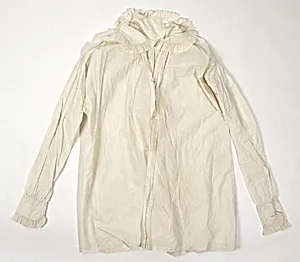
Shirt
Unknown Artist
1815–25
Medium
linen
Classification
Shirt
Culture
British
Department
Costume Institute
Museum
Metropolitan Museum of Art, New York, NY
Credit
Purchase, Friends of The Costume Institute Gifts, 1980
Accession Number
1980.280.7
Rights
Public Domain
Art Historical Context
This elegant linen shirt, crafted by an unknown British artist between 1815 and 1825, offers a glimpse into Regency-era fashion during a transformative time in British history. Following the Napoleonic Wars, Britain was embracing social stability and the early stirrings of industrialization, which influenced everyday attire. Men's shirts like this one were essential wardrobe staples, typically worn under tailored coats and waistcoats, symbolizing refined masculinity and practicality. Made from fine linen—a breathable, durable natural fiber prized for its crispness and comfort—this garment highlights the craftsmanship of early 19th-century tailoring. Linen's significance lay in its versatility for both daywear and formal occasions, often hand-stitched with precise pleats and collars that framed the high necklines of the period. Though simple in design, such shirts reflected the era's emphasis on understated elegance over ostentation. Acquired by The Metropolitan Museum of Art's Costume Institute in 1980 through the generosity of the Friends of The Costume Institute, this piece preserves a tangible link to Britain's sartorial past. Visitors can appreciate how ordinary clothing encapsulated cultural norms, inviting us to ponder the lives of those who wore it amid profound historical change.