
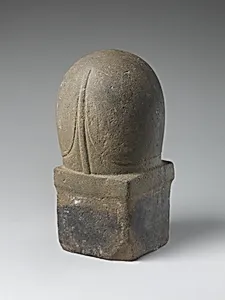
Shiva Linga
Unknown Artist
7th–8th century
Medium
Sandstone
Dimensions
H. 12 1/2 in. (31.8 cm); W. 6 1/2 in. (16.5 cm); D. 6 in. (15.2 cm)
Classification
Sculpture
Culture
Southern Thailand
Department
Asian Art
Museum
Metropolitan Museum of Art, New York, NY
Credit
Gift of Steven Kossak, The Kronos Collections, 1992
Accession Number
1992.150.3
Rights
Public Domain
Art Historical Context
This exquisite sandstone Shiva Linga, carved by an unknown artist in southern Thailand during the 7–8th century, as a profound emblem of Hindu devotion. Measuring just 12½ inches tall, its compact form—6½ inches wide and 6 deep—suggests it was likely a votive object or temple shrine piece, ideal for personal worship or ritual processions. Crafted from durable sandstone, a favored medium in Southeast Asian sculpture for its workability and weather resistance, the linga embodies the aniconic representation of Shiva, the Hindu god of destruction and regeneration, symbolizing cosmic energy and creative power. In the vibrant cultural landscape of early medieval Thailand, influenced by the Srivijaya maritime empire, Hinduism flourished alongside Buddhism. Such lingas were central to Shaivite rituals, where devotees offered milk, water, and prayers to invoke divine blessings. The smooth, abstracted form highlights masterful stone-carving techniques of the era, with subtle contours evoking both phallic vitality and abstract transcendence, bridging the human and divine. Today, this rare survivor graces the Metropolitan Museum of Art's Asian Art collection, a gift from Steven Kossak of The Kronos Collections in 1992. It invites visitors to ponder the enduring spiritual legacy of ancient Southeast Asia.