
Shoe-Black
18th century
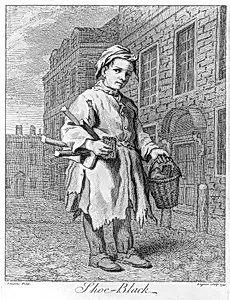
Medium
Etching
Dimensions
plate: 9 13/16 x 7 1/2 in. (25 x 19 cm) sheet: 10 1/16 x 7 11/16 in. (25.5 x 19.5 cm)
Classification
Prints
Department
Drawings and Prints
Museum
Metropolitan Museum of Art, New York, NY
Credit
The Elisha Whittelsey Collection, The Elisha Whittelsey Fund, 1953
Accession Number
53.522.32
Rights
Public Domain
Tags
Art Historical Context
**Shoe-Black** by Jacopo Amigoni invites visitors into the lively world of 18th-century Europe through this delicate etching, measuring a modest plate size of 9 13/16 x 7 1/2 inches. Created as a print from the Drawings and Prints department at The Metropolitan Museum of Art, it belongs to The Elisha Whittelsey Collection, acquired through the Elisha Whittelsey Fund in 1953. The tag "Boys" hints at its focus on youthful figures, likely portraying a shoeblack—a young boy tasked with polishing shoes on the bustling streets. Amigoni, a prominent Venetian Rococo artist (1675–1752), was renowned for his elegant, playful paintings and decorative frescoes across Italy, England, and Spain. While best known for oil paintings, this etching showcases his versatility in printmaking. Etching, an intaglio technique where acid etches intricate lines into a metal plate, allowed for precise details and tonal subtlety, making fine art accessible beyond original canvases. In the Rococo era, such prints democratized imagery of everyday life amid ornate aristocratic scenes. This work reflects the period's fascination with genre subjects—ordinary people amid grandeur—offering a poignant glimpse into urban youth and labor. A charming piece for pondering 18th-century social textures! (198 words)
About the Artist
Jacopo Amigoni · 1682–1752
A pioneer of the Venetian Rococo, Amigoni's oeuvre consists of decorative frescoes for churches and palaces, history and mythological paintings, and a few etchings. Comment on works: Religious; Mythology; Portraits