
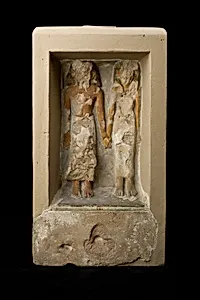
Shrine with statues and relief
Unknown Artist
ca. 1550–1450 B.C.
Medium
Sandstone, paint
Dimensions
H. 47.6 cm (18 3/4 in.); W. 0.24 cm (9 7/16 in.); D. 20.7 cm (8 1/8 in.)
Classification
Shrine, statues, Ipunefer, Aashyt
Period
New Kingdom
Department
Egyptian Art
Museum
Metropolitan Museum of Art, New York, NY
Credit
Gift of Egypt Exploration Fund, 1906
Accession Number
06.1231.87
Rights
Public Domain
Art Historical Context
This exquisite sandstone shrine, dating to around 1550–1450 B.C. from Egypt's early 18th Dynasty (New Kingdom), stands as a testament to the era's spiritual devotion. Crafted by an unknown artist, it features integrated statues and relief carvings, about 18¾ inches tall. Originally adorned with vibrant paints—now faded—these colors would have brought divine figures to life, emphasizing the Egyptians' belief in a colorful, eternal afterlife. The New Kingdom marked Egypt's imperial zenith, following the Hyksos expulsion, with pharaohs like Thutmose III expanding the realm and commissioning grand art. Sandstone, quarried from nearby sites, was prized for its durability and fine grain, ideal for intricate reliefs depicting gods, offerings, or royal piety. Paint traces reveal techniques like sunk relief, where figures were carved into the stone and outlined boldly for temple lighting. Housed today in the Metropolitan Museum of Art (gift of the Egypt Exploration Fund, 1906), this shrine likely served as a votive object in a household or temple, inviting worshippers to connect with the divine. Its compact scale belies its profound cultural role: a portal to the sacred, blending sculpture and narrative in a style that influenced millennia of Egyptian artistry.