
Sibylla Erythrea
Medium
oil on panel
Dimensions
126; 76.5; 7.5; 141.5; 94
Rights
Public Domain
About this artwork
inscription, outer wing, centre left, in the book: ‘SYBYLLA ERYTHREA’
Art Historical Context
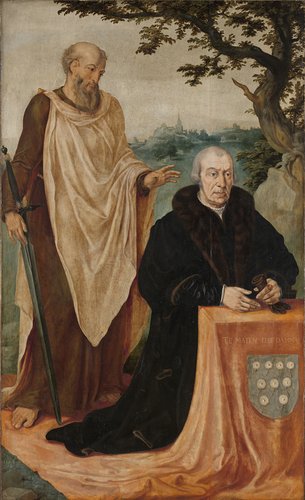
Maarten van Heemskerck’s *Sibylla Erythrea* (1564) portrays the Erythraean Sibyl, one of the ancient prophetesses whose oracles Renaissance audiences believed foretold the coming of Christ. Painted in oil on panel and measuring 126 by 76.5 centimetres, the work originally formed the outer wing of a larger altarpiece. The clear inscription “SYBYLLA ERYTHREA” on the open book identifies the figure and underscores the Renaissance fascination with classical wisdom reconciled to Christian belief. Van Heemskerck, a leading Haarlem painter of the Dutch Renaissance, spent several years in Italy absorbing the monumental figure style of Michelangelo and Raphael. He brought these influences back to the Netherlands, merging them with the precise detail and luminous colour typical of Northern oil technique. The result is a commanding, statuesque sibyl whose drapery and architectural setting convey both antique dignity and contemporary religious meaning. As part of a folding altarpiece, the panel would have been visible when the wings were closed, offering viewers a striking image of pagan prophecy on the threshold of sacred narrative. Today in the Rijksmuseum, it remains a vivid example of how sixteenth-century artists bridged classical learning and Christian devotion.