
Side chair
Unknown Artist
third quarter 18th century
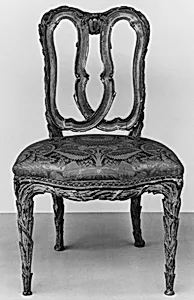
Medium
Walnut, painted and gilded; damask
Dimensions
Overall: H. 34 1/2 x W. 20 1/2 x D. 17 1/2 in. (87.6 x 52.1 x 44.5 cm)
Classification
Woodwork-Furniture
Culture
Italian
Department
European Sculpture and Decorative Arts
Museum
Metropolitan Museum of Art, New York, NY
Credit
Gift of George Blumenthal, 1941
Accession Number
41.100.298
Rights
Public Domain
Art Historical Context
This elegant side chair, crafted in Italy during the third quarter the 18th centurycirca 1750–1779), exemplifies the opulent furniture traditions of the period. Produced by an unknown artisan, it stands at 34½ inches high, designed for graceful seating in grand salons or reception rooms of wealthy households. As part of The Metropolitan Museum of Art's Sculpture and Decorative Arts—generously gifted by George Blumenthal 1941—it reflects the era's blend of functionality and lavish display, when chairs like this formed suites that furnished aristocratic interiors. The chair's frame is finely carved from walnut, a durable and prized wood, then painted and adorned with gilding to mimic costly materials like gold. Its seat and upholstery feature sumptuous damask fabric, a silk weave often patterned with florals or scrolls, adding tactile luxury and visual splendor. These techniques highlight Italian woodworking mastery, where surface decoration elevated everyday objects into status symbols amid the late Baroque and emerging Rococo tastes. Culturally, such chairs underscored Italy's enduring influence on European design, bridging Renaissance craftsmanship with Enlightenment refinement. Visitors can appreciate how this piece once hosted lively conversations in candlelit palaces, a testament to the artistry of anonymous makers whose work defined domestic grandeur.