
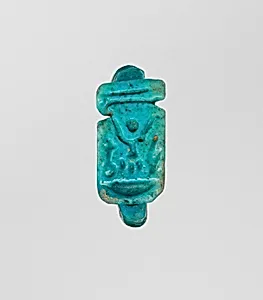
Signet ring
Unknown Artist
ca. 1070–712 B.C.
Medium
Blue faience
Dimensions
bezel: L. 2 cm (13/16 in.); Diam. 2.8 cm (1 1/8 in.)
Classification
Ring, signet
Period
Third Intermediate Period
Department
Egyptian Art
Museum
Metropolitan Museum of Art, New York, NY
Credit
Purchase, Edward S. Harkness Gift, 1926
Accession Number
26.7.826
Rights
Public Domain
Art Historical Context
Step into ancient Egypt with this striking blue faience signet ring, crafted around 1070–712 B.C. during the Third Intermediate Period (Dynasties –24). Measuring a compact bezel of 2 cm long and 2.8 cm in diameter, this intimate jewel was designed for practical elegance—its flat, engraved surface perfect for impressing a personal seal into clay or wax, authenticating documents, goods, or royal decrees. Now housed in the Metropolitan Museum of Art's Egyptian Art department, it was acquired through the Edward S. Harkness Gift in 1926. Faience, a signature Egyptian material made from crushed quartz paste coated in a vivid turquoise glaze (often using copper for that iconic blue hue), symbolized the Nile's life-giving waters and rebirth. More affordable than semi-precious stones like lapis lazuli, it democratized beauty and status symbols across social classes. This ring exemplifies the period's artisanal ingenuity, blending functionality with spiritual resonance amid political fragmentation after the New Kingdom's glory. In the Third Intermediate Period, as Egypt splintered into rival kingdoms with Libyan influences, such seals underscored enduring administrative traditions and personal identity. A small artifact, yet it whispers of bureaucracy, trade, and devotion—reminding us how everyday objects carried profound cultural weight.