
Signet Ring of John, Imperial Spatharios
Unknown Artist
10th century
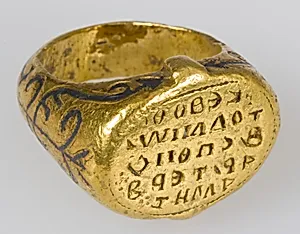
Medium
Gold, niello
Dimensions
Overall: 11/16 × 7/8 × 15/16 in., 1.2oz. (1.7 × 2.2 × 2.4 cm, 34.023g) Bezel: 11/16 × 3/4 × 3/16 in. (1.7 × 1.9 × 0.4 cm) Inside circumference: 2 1/8 in. (5.3 cm)
Classification
Metalwork-Gold
Culture
Byzantine
Department
Medieval Art
Museum
Metropolitan Museum of Art, New York, NY
Credit
Gift of Guy and Valerie Tempest Megargee, 1992
Accession Number
1992.239
Rights
Public Domain
Art Historical Context
This exquisite 10th-century Byzantine signet ring belonged to John, an Imperial Spath—a prestigious title denoting a high-ranking member of the emperor's bodyguard, responsible for bearing the imperial sword. Crafted during the height of the Byzantine Empire's golden age under the Macedonian dynasty, such rings were essential tools of authority, used to seal official documents with a personal emblem, blending practicality with symbols of power and loyalty. Made of gleaming gold with intricate niello inlays—a technique where a black metallic alloy is fused into fine engravings for striking contrast—the ring showcases the Byzantines' mastery of metalwork. Measuring just under an inch across its bezel, its luxurious materials and precise craftsmanship reflect the empire's fusion of Roman engineering and Eastern opulence, often drawing from Christian iconography or imperial motifs (though specifics here remain enigmatic). Housed in the Metropolitan Museum of Art's Medieval Art collection, this ring offers a tangible glimpse into Byzantine court life, where even personal adornments proclaimed status amid Constantinople's splendor. A donor gift from 1992, it reminds us how jewelry bridged the mundane and the majestic in a world of emperors and intrigue.