
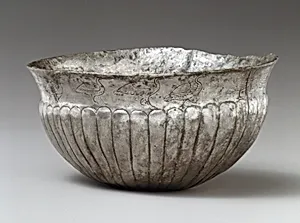
Silver bowl
Unknown Artist
6th century BCE
Medium
Silver
Dimensions
H. 2 1/8 in. (5.4 cm) diameter 4 1/16 in. (10.3 cm)
Classification
Gold and Silver
Culture & Period
Cypriot · Late Archaic–Classical
Department
Greek and Roman Art
Museum
Metropolitan Museum of Art, New York, NY
Credit
The Cesnola Collection, Purchased by subscription, 1874–76
Accession Number
74.51.4562
Rights
Public Domain
Tags
Art Historical Context
This exquisite silver bowl, crafted by an unknown Cypriot artist in the 6th century BCE, offers a glimpse into the refined metalworking traditions of the Late ArchaicClassical period. Standing just over 2 inches tall with a diameter of about 4 inches, its scale suggests it was likely used for drinking, offerings, or as a luxurious table vessel among the island's elite. The use of silver—a precious, malleable metal—highlights Cyprus's role as a prosperous Mediterranean hub, where skilled artisans hammered and possibly engraved delicate designs, including motifs of birds that evoke the natural world and symbolic vitality. Hailing from a culture at the crossroads of Greek, Phoenician, and Near Eastern influences, this bowl reflects Cyprus's vibrant artistic exchange during a time of political flux under Assyrian and Egyptian oversight. Bird imagery, a recurring tag in such artifacts, often adorned Cypriot silverwork to convey themes of flight, divinity, or protection, blending local ingenuity with emerging Classical aesthetics. Acquired through The Cesnola Collection in the 1870s, it now graces the Metropolitan Museum of Art's Greek and Roman Art department, preserving a tangible link to ancient Cyprus's opulent daily life and spiritual practices.