
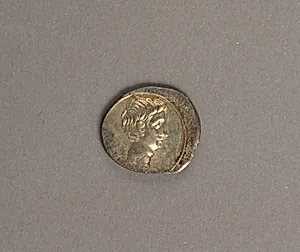
Silver denarius of Octavian (Augustus)
Unknown Artist
ca. 29–27 BCE
Medium
Silver
Dimensions
13/16 × 1/16 in., 3.8g (2.1 × 0.2 cm, 3.8g)
Classification
Coins
Culture & Period
Roman · Late Republican
Department
Greek and Roman Art
Museum
Metropolitan Museum of Art, New York, NY
Credit
Rogers Fund, 1908
Accession Number
08.170.89
Rights
Public Domain
Tags
Art Historical Context
Step into the turbulent world of Late Republican Rome with this exquisite silver denarius, minted around 29–27 BCE, the profile of Octavian—soon to be enshrined as Emperor Augustus. Struck from high-quality silver and weighing just 3. grams, this tiny coin (measuring about 2.1 cm in diameter) was a cornerstone of Roman economy and propaganda. As the standard silver currency, denarii like this circulated widely, funding armies and trade while broadcasting the ruler's image to the masses. Minted in the aftermath of Octavian's victory at Actium in 31 BCE, this coin captures a pivotal moment: the shift from civil war to imperial stability. Octavian's profile, likely laureate and idealized in the classical Roman style, symbolized his divine favor and authority. Roman coinage techniques—using engraved dies to strike precise, high-relief portraits—elevated these objects to miniature sculptures, blending artistry with political messaging. Housed in the Metropolitan Museum of Art's Greek and Roman Art Department (acquired via the Rogers Fund in 1908), this denarius offers a tangible link to Augustus's transformation of Rome from republic to empire. Hold it close, and feel the weight of history in your palm!