
Silver pendant ring with steatite scarab
Unknown Artist
6th–5th century B.C
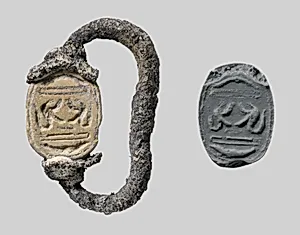
Medium
Silver, steatite
Dimensions
Other: 5/16 x 1/4 x 1/16 in. (0.9 x 0.6 x 0.2 cm) Other (width of ring): 7/8 in. (2.2 cm)
Classification
Gems|Gold and Silver
Culture & Period
Cypriot · Archaic
Department
Greek and Roman Art
Museum
Metropolitan Museum of Art, New York, NY
Credit
The Cesnola Collection, Purchased by subscription, 1874–76
Accession Number
74.51.4171
Rights
Public Domain
Tags
Art Historical Context
This exquisite silver pendant ring, adorned with a steatite scarab, hails from ancient Cyprus during the Archaic period (6th–5th B.C.). Crafted from gleaming silver for the ring band—measuring just 7/8 inch wide—and a tiny steatite (soapstone) scarab beetle (0.9 x 0.6 x 0.2 cm), it exemplifies the fine jewelry of Cypriot artisans. Scarabs, iconic Egyptian symbols of rebirth and protection, were widely adopted in the eastern Mediterranean, reflecting Cyprus's role as a vibrant cultural crossroads influenced by Egypt, Phoenicia, and emerging Greek styles. In the Archaic era, Cyprus thrived as a prosperous island kingdom, blending Near Eastern motifs with local ingenuity. Steatite's soft, carvable nature made it ideal for detailed scarab engraving, often used as seals or amulets for the elite. This piece, likely worn as both ring and pendant, highlights the portability and multifunctionality of personal adornments, serving talismanic purposes in daily life or rituals. Acquired through The Cesnola Collection (1874–76) at The Metropolitan Museum of Art, it offers a window into Cyprus's ancient luxury trade. Visitors, imagine slipping this delicate treasure onto your finger— a timeless emblem of resilience and cross-cultural exchange!