
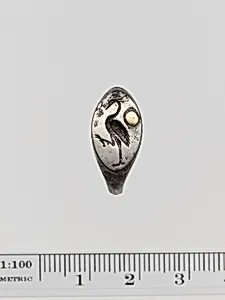
Silver ring
Unknown Artist
ca. 450–400 BCE
Medium
Silver
Dimensions
Length: 9/16 in. (1.5 cm)
Classification
Gems
Culture & Period
Greek · Classical
Department
Greek and Roman Art
Museum
Metropolitan Museum of Art, New York, NY
Credit
Bequest of W. Gedney Beatty, 1941
Accession Number
41.160.457
Rights
Public Domain
Tags
Art Historical Context
This exquisite silver ring, dating to around 450–400 BCE, hails from Classical Greece, a golden age of art and philosophy when Athens flourished under figures like Pericles. Measuring just 1.5 cm in length, this tiny jewel exemplifies the precision of ancient Greek metalworking, crafted entirely from silver—a precious metal valued for its luster and durability. Housed in the Metropolitan Museum of Art's Greek and Roman Art Department, entered the collection through the 1941 bequest of W. Gedney Beatty is classified among gems, highlighting its role as a finely wrought personal ornament. In Classical Greek culture, such rings were more than mere jewelry; they often functioned as seals for documents or wax, blending utility with artistry. The motif of birds, suggested by its tags, reflects nature-inspired themes common in Greek iconography, evoking freedom, the divine, or mythological tales like those of Zeus's eagles. Silver's use here underscores the era's advanced techniques in hammering, chasing, and possibly engraving, creating intricate designs on a miniature scale that rival larger sculptures in sophistication. As a window into everyday elite life, this ring reveals the Greeks' love for harmony and detail, bridging the monumental temples of the Acropolis with intimate adornments. Visitors, imagine slipping it on— a tangible link to antiquity's elegance!