
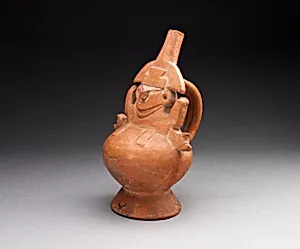
Single Spout Vessel with Molded Abstract Figure
1000–1476
Medium
Ceramic and pigment
Dimensions
H.: 23.9 cm (9 3/8 in.)
Classification
earthenware
Department
Arts of the Americas
Museum
Art Institute of Chicago
Accession Number
9119
Rights
Public Domain
Art Historical Context
This remarkable Single Spout Vessel with Molded Abstract Figure hails from the Lambaye culture of ancient Peru, thriving in the northern coastal region between 1000 and 1476 CE. Crafted from earthenware ceramic with added pigments, it stands at 23.9 cm tall, exemplifying the skilled pottery traditions of the pre-Inca Americas. Housed in the Art Institute of Chicago Arts of the Americas department it showcases the Lambayeque people's mastery of molding and firing techniques to create functional yet artistic objects. The vessel's design features a single spout—ideal for pouring liquids like chicha, a fermented corn beverage central to Andean rituals and social life—and a boldly molded abstract figure adorning its body. This abstraction reflects Lambayeque stylistic innovation, blending humanoid forms with symbolic motifs that may evoke deities, ancestors, or mythical beings. Pigments enhance the surface, adding vibrant details that highlight the culture's advanced slip decoration methods. Culturally, such vessels held profound significance, often used in ceremonies, burials, or elite feasting, bridging the everyday and the spiritual. They underscore the Lambayeque's artistic legacy, bridging earlier Moche influences with emerging Inca horizons, offering a window into a vibrant society renowned for its metallurgy and expressive ceramics.