
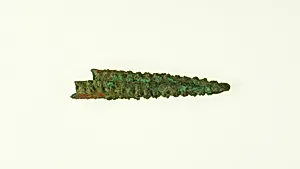
Siphon nozzle
Unknown Artist
ca. 1295–1070 B.C.
Medium
Bronze
Dimensions
L. 4.6 cm (1 13/16 in.)
Classification
Siphon nozzle
Period
New Kingdom, Ramesside
Department
Egyptian Art
Museum
Metropolitan Museum of Art, New York, NY
Credit
Rogers Fund and Edward S. Harkness Gift, 1922
Accession Number
22.1.961
Rights
Public Domain
Art Historical Context
This delicate bronze siphon nozzle, to around 1295–1070 B.C., hails from Egypt's New Kingdom during the Ramesside period (Dynasties 19–20). Measuring just 4.6 cm in length, this small artifact exemplifies the sophisticated engineering and craftsmanship of ancient artisans. Crafted from bronze—a prized alloy of copper and tin—this nozzle was likely part of a siphon system used for transferring liquids, such as water from the Nile for irrigation or in temple rituals, highlighting the civilization's advanced hydraulic knowledge at the height of its imperial power under pharaohs like Ramesses II. Bronze casting techniques during this era involved intricate molding and polishing, producing durable tools that blended utility with refined aesthetics. Though functional, the nozzle's precise form reflects the Egyptians' mastery of metallurgy, essential for agriculture in the arid Nile Valley. Such everyday objects offer a window into daily life beyond grand monuments, revealing how technology supported the empire's prosperity. Acquired through the Rogers Fund and Edward S. Harkness Gift in 1922, this piece now resides in the Metropolitan Museum of Art's Egyptian Art department, inviting visitors to appreciate the ingenuity of a bygone era.