
Sir William Penn
c. 1899-1920
Medium
Drawing
Classification
Drawing
Department
Smithsonian Collection
Museum
Smithsonian American Art Museum
Credit
National Portrait Gallery, Smithsonian Institution
Accession Number
S/NPG.72.52
Rights
Public Domain
Tags
Art Historical Context
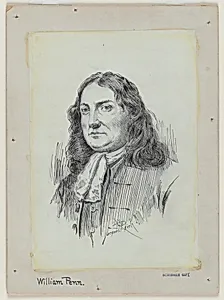
**Sir William Penn** *Jacques Reich (18521923), c. 1899–1920* *Drawing; National Portrait Gallery, Smithsonian; Smithsonian American Art Museum* evocative drawing portrays William Penn, the English Quaker and founder of Pennsylvania, a key figure in colonial America. Created by Jacques Reich, a Polish-American artist celebrated for his precise portraiture, the work dates to the late 19th early 20th century Penn (1644–1718), titled here as "Sir," is remembered for his 1682 treaty with the Lenape people—famously transacted without a written document—and his advocacy for religious freedom, shaping the tolerant ethos of the Pennsylvania colony amid European expansion. Reich's mastery shines in this drawing medium, where delicate lines and subtle shading capture Penn's resolute gaze and period attire, evoking the gravitas of a statesman. As a standalone portrait rather than a preparatory sketch, it highlights the era's fascination with historical icons, blending European draftsmanship traditions with American identity. Housed in the Smithsonian's National Portrait Gallery, this piece invites reflection on Penn's dual legacy as colonizer and peacemaker, bridging 17th-century idealism with modern interpretations of early U.S. history. A must-see for those exploring the roots of American democracy.