
Situla
Unknown Artist
1550–1600
Medium
Glass
Dimensions
Overall: 6 1/2 × 6 3/4 in. (16.5 × 17.1 cm)
Classification
Glass
Culture
Italian, Venice (Murano) or Southern Netherlandish
Department
European Sculpture and Decorative Arts
Museum
Metropolitan Museum of Art, New York, NY
Credit
Gift of James Jackson Jarves, 1881
Accession Number
81.8.127
Rights
Public Domain
Art Historical Context
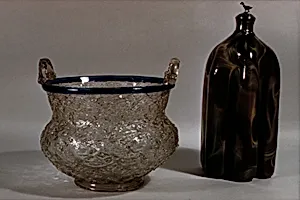
This exquisite *Situla*, a bucket-shaped glass vessel dating from 1550–1600, exemplifies the pinnacle of Renaissance glassmaking. Measuring just 6½ × 6¾ inches, its delicate form likely served as a luxurious container for liquids or as a decorative item in elite households. Attributed to either Venetian artisans from Murano—Europe's premier glassmaking hub—or craftsmen from the Southern Netherlands, reflects the era's cross-cultural exchange of techniques amid thriving trade routes. Murano's glassblowers revolutionized the medium during the 16th century, mastering clear *cristallo* glass and intricate patterns like lattimo (milky white threads) or complex filigree, which mimicked costly metalwork or pietra dura inlays. Southern Netherlandish workshops, too, excelled in innovative enameling and cutting, producing opulent wares for princely courts. Though the exact style here remains unidentified due to the unknown artist, the situla's survival speaks to its status as a coveted luxury good, blending functionality with artistry. Acquired as a gift from collector James Jackson Jarves in 1881, this piece now graces the Metropolitan Museum of Art's European Sculpture and Decorative Arts collection. It invites us to marvel at the anonymous masters whose breath and fire transformed sand into shimmering elegance, bridging the Renaissance's scientific curiosity with timeless beauty.