
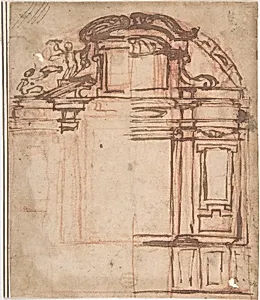
Sketch for Wall Monument
16th century
Medium
Red chalk, brush, and brown ink
Dimensions
7 x 6 in. (17.8 x 15.2 cm)
Classification
Drawings
Department
Drawings and Prints
Museum
Metropolitan Museum of Art, New York, NY
Credit
Gift of Cornelius Vanderbilt, 1880
Accession Number
80.3.591
Rights
Public Domain
Tags
Art Historical Context
This delicate *Sketch for Wall Monument*, created by an anonymous Italian artist in the 16th century, offers a glimpse into the Renaissance workshop. Rendered in red chalk, brush, and brown ink on a modest 7 x 6 inch sheet, it captures a preliminary design for a wall-mounted monument—likely a funerary or commemorative structure destined for a church or palazzo. The red chalk provides soft, tonal modeling for sculptural depth, while the brown ink outlines add precision, techniques favored by Italian draftsmen for their versatility in planning architecture and sculpture. In 16th-century Italy, during the High Renaissance, such sketches were essential tools for artists and patrons negotiating grand commissions. Wall monuments symbolized piety, power, and humanism, blending classical motifs with Christian iconography to honor the elite. This anonymous work exemplifies the era's emphasis on preparatory drawing as a creative process, bridging idea to execution in marble or bronze. Now housed in the Metropolitan Museum of Art's Drawings and Prints department, it entered the collection as a gift from Cornelius Vanderbilt in 1880. Visitors can appreciate how these intimate studies reveal the artistry behind enduring public memorials, inviting us to ponder the hands that shaped Italy's monumental legacy.