
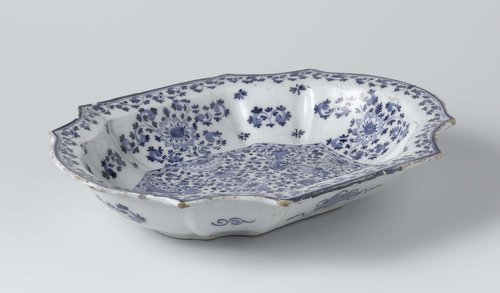
Slabak van blauw beschilderde faience
c. 1750 - c. 1775
Medium
salad bowl
Dimensions
33.5; 27; 6.5
Rights
Public Domain
About this artwork
merk, onderkant bak, geschilderd: ‘HB(ineen)/ 160’
Art Historical Context
### Slabak van Blauw Beschilderde Faience This elegant salad bowl, titled *Slabak van blauw beschilderde faience*, hails from the renowned Dutch pottery factory De Drie Porceleyne Flessies (The Three Porcelain Bottles) in Delft, active around 1750–1775. Crafted as a practical yet decorative serving dish—measuring 33.5 cm wide, 27 cm deep, and just 6.5 cm high—it exemplifies the golden era of Delft Blue ware. Faience, a tin-glazed earthenware, allowed potters to mimic the prized Chinese porcelain flooding European markets, making luxury accessible to middle-class households. The bowl's signature blue decoration, painted in cobalt under the glossy tin glaze before firing, creates vibrant, enduring motifs typical of 18th-century Delft style. A painted mark on the underside—"HB (intertwined)/160"—likely denotes the factory owner or decorator's initials and a production number, authenticating its provenance. This technique ensured the vivid blues wouldn't fade, a hallmark of Delft's innovative glazing process. Culturally, such slabakken were staples in Dutch homes, used for tossing and serving fresh salads amid the prosperous post-Golden Age. Produced by workshops like De Drie Porceleyne Flessies, these pieces blended utility with artistry, reflecting Holland's seafaring trade influences and enduring love for blue-and-white ceramics. A charming survivor of everyday elegance! (198 words)