
Slag bij Almenara
1710
Medium
striking (metalworking)
Dimensions
41.36; 4.8
Rights
Public Domain
About this artwork
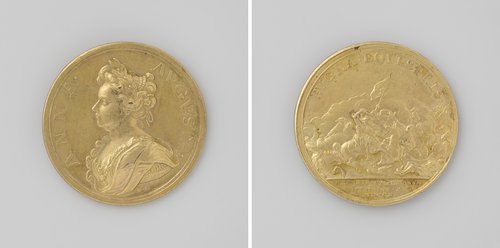
Bronzen penning. Voorzijde: borststuk vrouw met lauwerkrans binnen omschrift. Keerzijde: cavalleriegevecht; op voorgrond grijpt generaal Stanhope teugels van paard van generaal Amezaga en doodt hem binnen omschrift, boven opschrift
Art Historical Context
Step into the intricate world of 18th-century commemorative art with *Slag bij Almenara* (Battle of Almenara), a bronze medal struck by English engraver John Croker 1710. Measuring just 4.8 cm in diameter and weighing 41.36 grams, this finely crafted piece exemplifies the precision of metalworking through striking techniques, where detailed dies press designs into softened metal for sharp relief and enduring detail. The obverse features a bust a woman adorned with a laurel wreath—symbolizing victory—encircled by an inscription, while the reverse vividly captures a cavalry clash, highlighting the dramatic moment when General Stanhope seizes the reins of General Amezaga's horse and strikes him down. This medal immortalizes a pivotal skirmish from the War of the Spanish Succession, fought on July 27, 1710, near Almenara in Spain. Leading Anglo-Austrian forces, Stanhope's triumph over Bourbon Spanish troops marked an early Allied success in the Peninsular campaign, boosting morale and propaganda efforts. Croker, chief engraver at the Royal Mint, masterfully distilled this chaos into a compact narrative, using high-relief sculpting to convey motion and heroism. Such medals were prized cultural artifacts, blending numismatic artistry with historical record-keeping. Portable yet monumental, they allowed patrons to wear or display triumphs, preserving the glory of battle for generations in an era when print and sculpture dominated commemoration.