
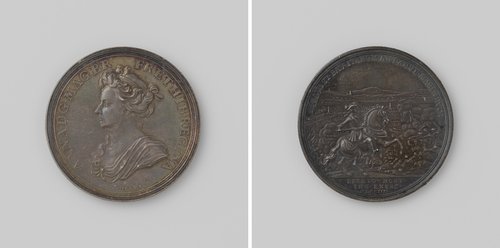
Slag bij Blenheim
1704
Medium
striking (metalworking)
Dimensions
39.74; 4.4
Rights
Public Domain
About this artwork
Gift of J.M. van Gelder-Nijhoff
Art Historical Context
Behold the *Slag bij Blen* (Battle of Blenheim a finely crafted commemorative medal struck by Dutch artist Jan Boskam in 1704. This small yet powerful artifact captures one of the most decisive battles of the War of the Spanish Succession where Anglo-Dutch forces under the Duke of Marlborough Prince Eugene triumphed over French and Bavarian troops on August 13 along the Danube River. Measuring just 4.4 cm in diameter and weighing 39.74 grams, it served as a wearable token of national pride and military glory during an era of intense European rivalries. Jan Boskam, a skilled medalist working in the Baroque tradition, employed the striking technique—a metalworking process where a hardened steel die is hammered into a soft metal blank to create intricate raised designs. This method allowed for exceptional detail in depicting battle scenes, portraits, and inscriptions, making medals like this both art objects and historical records. Common in the Netherlands amid the Golden Age's fascination with heroism and victory, such pieces circulated widely as propaganda and personal mementos. Generously donated by J.M. van Gelder-Nijhoff, this medal invites us to reflect on how art distilled the chaos of war into enduring symbols of triumph. A testament to 18th-century craftsmanship, it bridges history and artistry in your palm.