
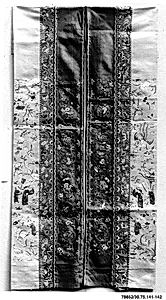
Sleeve Band
Unknown Artist
19th century
Medium
Silk; on silk
Dimensions
30 x 6 1/4 in. (76.20 x 15.88 cm)
Classification
Textiles-Embroidered
Culture & Period
China · Qing dynasty (1644–1911)
Department
Asian Art
Museum
Metropolitan Museum of Art, New York, NY
Credit
Bequest of William Christian Paul, 1929
Accession Number
30.75.141
Rights
Public Domain
Tags
Art Historical Context
This delicate **Sleeve Band**, crafted in 19th-century China during the Qing dynasty (1644–1911), exemplifies pinnacle of imperial textile artistry. Worn as a decorative cuff on elite garments, such as Manchu robes or women's jackets, it reflects the era's opulent fashion, where embroidered accessories signified status and refinement. Produced in the vibrant workshops of the Qing court or prosperous merchant families, these bands adorned sleeves to prevent fraying while showcasing exquisite craftsmanship. Embroidered on fine silk with silk threads, the band measures 30 x 6 1/4 inches (76.20 x 15.88 cm) and features intricate bird motifs—a hallmark of Chinese textile design symbolizing freedom, prosperity, and harmony with nature. Techniques like satin stitch and Peking knot created shimmering textures and lifelike details, highlighting silk's luxurious sheen prized in Qing society for its association with the emperor's own dragon robes. Such embroideries demanded years of training, blending technical precision with symbolic depth. Now in the Metropolitan Museum of Art's Asian Art Department (Bequest of William Christian Paul, 1929), this artifact offers a window into Qing cultural splendor, where everyday adornment became high art. Visitors, imagine slipping it onto a flowing silk sleeve—timeless elegance from China's golden age!