
Sleeve Band
Unknown Artist
19th century
Medium
Silk; on silk
Dimensions
35 1/4 x 5 1/4 in. (89.53 x 13.34 cm)
Classification
Textiles-Embroidered
Culture & Period
China · Qing dynasty (1644–1911)
Department
Asian Art
Museum
Metropolitan Museum of Art, New York, NY
Credit
Bequest of William Christian Paul, 1929
Accession Number
30.75.348
Rights
Public Domain
Tags
Art Historical Context
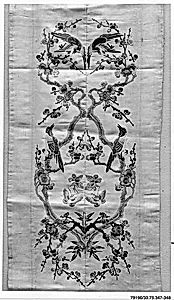
This exquisite **Sleeve Band** from19th-century Qing dynasty China (1644–1) is a finely embroidered textile, measuring 35¼ x 5¼ inches, designed as a decorative cuff for traditional robes. Crafted from silk threads on a silk ground, it exemplifies the pinnacle of Chinese embroidery during the Qing era, when such opulent accessories adorned the garments of the imperial court and elite classes. Sleeve bands like this were integral to Manchu-style clothing, framing the wrists with elegance and symbolism. The artwork features intricate motifs of birds and flowers, recurring themes in Chinese art that evoke harmony, prosperity, and the beauty of nature. Birds often symbolize joy and good fortune, while flowers represent renewal and virtue—auspicious emblems suited for daily wear or ceremonial attire. The meticulous stitching techniques, likely including satin and stem stitches, showcase the embroiderer's skill in creating texture and depth on the luxurious silk, a material prized for its sheen and durability. Acquired through the bequest of William Christian Paul in 1929 and now housed in the Metropolitan Museum of Art's Asian Art Department, this piece offers a window into Qing textile artistry, where craftsmanship blended utility with profound cultural expression. Visitors can appreciate how such delicate works transformed clothing into wearable poetry.