
Sleeve Band
Unknown Artist
19th century
Medium
Silk, metallic thread; on silk
Dimensions
24 1/2 x 3 1/2 in. (62.23 x 8.89 cm)
Classification
Textiles-Embroidered
Culture & Period
China · Qing dynasty (1644–1911)
Department
Asian Art
Museum
Metropolitan Museum of Art, New York, NY
Credit
Bequest of William Christian Paul, 1929
Accession Number
30.75.435
Rights
Public Domain
Tags
Art Historical Context
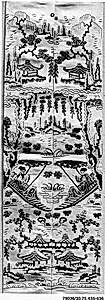
This exquisite **Sleeve Band** from19th-century China, during the Qing dynasty (4–1911), the era's masterful textile artistry. Worn as a decorative element on the sleeves of robes, particularly among the Manchu elite, these bands adorned garments for officials and nobility, blending functionality with opulent display. Produced in the final decades of imperial rule, it reflects the Qing court's love for lavish embroidery amid a period of cultural refinement and expanding trade. Crafted from silk with shimmering metallic threads, the band measures 24½ x 3½ inches and showcases intricate embroidered scenes of houses and boats. These motifs evoke serene riverside villages, a common theme in Chinese decorative arts symbolizing prosperity and harmony with nature. The use of metallic threads adds a luxurious luster, highlighting the technical virtuosity of Qing embroiderers who layered stitches for depth and texture—a hallmark of the period's textiles classified as embroidered masterpieces. Now housed in the Metropolitan Museum of Art's Asian Art Department through the 1929 bequest of William Christian Paul, this piece invites you to marvel at its delicate craftsmanship. Up close, the interplay of silk's softness and metal's gleam transports visitors to a bygone imperial world.