
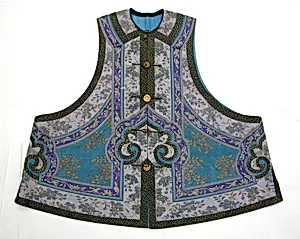
Sleeveless Jacket with Flowering Vine Pattern and Bands
Unknown Artist
late 19th–early 20th century
Medium
Silk tapestry (kesi)
Dimensions
Overall: 29 5/8 x 35 3/4 in. (75.2 x 90.8 cm)
Classification
Costumes-Tapestries
Culture
China
Department
Asian Art
Museum
Metropolitan Museum of Art, New York, NY
Credit
Gift of Florance Waterbury, 1945
Accession Number
45.125.14
Rights
Public Domain
Art Historical Context
This sleeveless jacket, created in China during the late 19th to early 20th century, the refined artistry of silk tapestry weaving known as kesi. The technique, which translates to “cut silk,” involves weaving threads of different colors to form intricate patterns without visible knots on the surface, allowing for a smooth, almost painterly effect. Here, delicate flowering vines and leafy bands adorn the garment, reflecting traditional Chinese appreciation for nature motifs that symbolize growth and renewal. Measuring just under 30 by 36 inches, the jacket would have provided lightweight elegance for daily or seasonal wear. Its classification as both costume and tapestry highlights how functional clothing in China often doubled as portable works of art. The vibrant silk threads and precise patterning demonstrate the high level of skill required by weavers during this period, when such textiles remained prized for their beauty and durability. Donated to the Metropolitan Museum of Art in 1945 by Florance Waterbury, this piece offers visitors a glimpse into the enduring legacy of Chinese textile traditions and the quiet sophistication of everyday luxury.