
Sleutel
Unknown Artist
ca. 1700
Medium
iron (metal)
Dimensions
5.5; 13.9
Rights
Public Domain
About this artwork
length 13.9 cm x width 5.5 cm
Art Historical Context
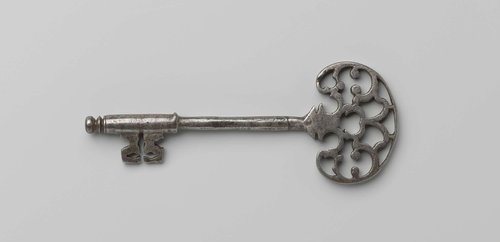
### Sleutel (Key) Step into the 18th century with *Sleutel*, a crafted iron key dating to around 1700. Measuring 13.9 cm in and 5.5 cm in width, this unassuming artifact exemplifies the everyday craftsmanship of the Baroque era. Produced by an unknown artisan, its modest dimensions suggest it was designed for practical use—perhaps securing a door, chest, or gate in a Dutch household or workshop, as "sleutel" means "key" in DutchIron was the workhorse metal of the time, forged through labor-intensive blacksmithing techniques that involved heating, hammering, and shaping raw metal over an anvil. Unlike lavish gold or silver keys reserved for nobility, this iron example highlights the functional artistry of common tradespeople. Its survival speaks to the durability of such handiwork, offering a tangible link to pre-industrial life when keys represented security, ownership, and trust. In a museum context, *Sleutel* invites us to ponder the unsung heroes of history: the locksmiths whose skills kept societies running. Though simple, it embodies the cultural reverence for utility in early modern Europe, reminding visitors that beauty often lies in purpose.