
Slippers
1800–1810
Medium
Leather
Classification
Slippers
Culture
British
Department
Costume Institute
Museum
Metropolitan Museum of Art, New York, NY
Credit
Brooklyn Museum Costume Collection at The Metropolitan Museum of Art, Gift of the Brooklyn Museum, 2009; Gift of Mary E. Matthews, 1961
Accession Number
2009.300.5254a, b
Rights
Public Domain
Art Historical Context
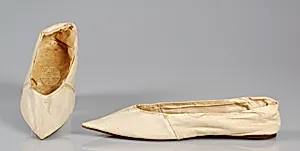
Step into the refined world of early 19th-century British with *Slippers* by Ealand, crafted between 1800 and 1810 from supple leather. These delicate indoor shoes, housed in the Costume Institute at The Metropolitan Museum of Art, exemplify the elegance of Regency-era footwear. Made for private domestic settings, slippers like these were essential for women navigating polished parquet floors in drawing rooms, offering comfort without the bulk of outdoor boots. Leather as a medium highlights skilled British craftsmanship of the period, where tanners and shoemakers transformed hides into luxurious, form-fitting pieces through hand-stitching and molding techniques. Ealand, likely a specialist artisan, contributed to a burgeoning fashion culture influenced by neoclassical tastes and the Napoleonic era's social shifts. Their slim profile and soft construction reflect a blend of practicality and status, worn by the genteel classes during leisurely pursuits like tea or piano playing. Acquired through the Brooklyn Museum Costume Collection (gift of Mary E. Matthews, 1961, transferred to the Met in 2009), these slippers preserve a tangible slice of everyday luxury. They invite us to ponder the intimate lives behind grand historical narratives, reminding visitors of fashion's role in shaping identity.