
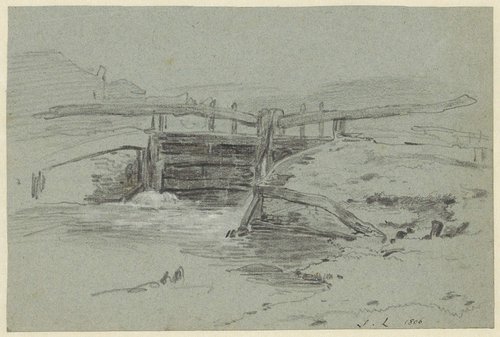
Sluis in een landschap
Medium
paper
Dimensions
227; 151
Rights
Public Domain
About this artwork
zwart en wit krijt op blauw papier
Art Historical Context
**Sluis in een landschap (Sluice in a Landscape)***John Linnell (), 1806* *Black and white chalk on blue, 151 × 227 mm* Created when John Linnell (II was just 14 years, this delicate drawing captures a sluice gate nestled in a serene landscape, showcasing the young British artist's precocious talent. Linnell, son of the renowned painter John Linnell (1792–1882), came from a family immersed in art; his father was a key figure in early 19th-century British landscape painting, influenced by William Blake and the Norwich School. At this tender age, Linnell was already honing skills that would define his career, blending meticulous observation with a budding romantic sensitivity to nature's quiet drama. The work's medium—black and white chalk on blue paper—is a masterful choice for atmospheric depth. The toned blue ground evokes misty skies and receding distances, while white chalk highlights catch the light on water and foliage, and black defines shadows and structural details like the sluice's wooden beams. This technique, popular among draftsmen of the era, allowed for quick, expressive studies ideal for plein air sketching or studio preparation, reflecting the growing emphasis on direct-from-nature observation in British Romanticism. Though modest in scale, *Sluis in een landschap* offers a window into Linnell's early fascination with water features and rural engineering—motifs echoing Dutch Golden Age influences while foreshadowing England's canal-era landscapes. A charming gem for collectors, it reminds us how childhood sketches can bloom into artistic legacies.