
Small covered winepot or teapot
1662–1722
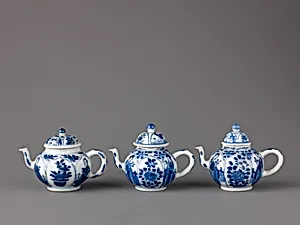
Medium
Porcelain painted in underglaze blue.
Dimensions
Height with lid: 3 7/16 in. (8.7 cm.) to 3 1/2 in. (8.8 cm.)
Classification
Ceramics
Culture
Chinese
Department
Robert Lehman Collection
Museum
Metropolitan Museum of Art, New York, NY
Credit
Robert Lehman Collection, 1975
Accession Number
1975.1.1712
Rights
Public Domain
Tags
Art Historical Context
This delicate small covered winepot or teapot, in China during the Kangxi period (1662–1722) of the Qing dynasty exemplifies the pinnacle of imperial porcelain production at Jingdezhen kilns. Standing just over 3½ inches tall with its lid, this petite vessel was likely used for serving wine or tea in elite households, its compact size perfect for personal or ceremonial use. The porcelain body, painted in vibrant underglaze blue with floral motifs—evident from its decorative tags—captures the era's fascination with nature's elegance, a recurring theme in Chinese ceramics. The underglaze blue technique, using cobalt pigment applied beneath a clear glaze and fired at intense temperatures, ensured enduring color and a luminous sheen that defined Kangxi blue-and-white wares. This method, perfected over centuries, made Chinese porcelain a global luxury, eagerly traded along the Silk Road and to Europe, influencing designs from Delft to Meissen. Housed in the Robert Lehman Collection at The Metropolitan Museum of Art since 1975, this piece highlights the technical mastery and aesthetic refinement of Qing artisans, offering visitors a tangible link to 17th-century Chinese culture and its enduring export legacy.
About the Artist
Chinese
The artist known simply as "Chinese" in museum records represents the vast tradition of anonymous or unattributed masters in Chinese art history, with 99 works preserved in our collection. These pieces exemplify the enduring legacy of guó huà, or traditional Chinese painting, one of the world's oldest continuous artistic practices. Early life is not well documented, as is common for many practitio...