
Small platter
Unknown Artist
19th century
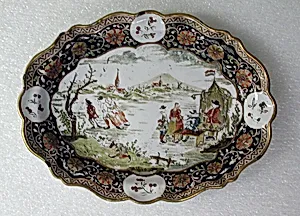
Medium
Tin-glazed earthenware
Dimensions
7 1/2 × 5 1/2 in. (19.1 × 14 cm)
Classification
Ceramics-Pottery
Culture
Dutch, Delft
Department
European Sculpture and Decorative Arts
Museum
Metropolitan Museum of Art, New York, NY
Credit
Gift of Henry G. Marquand, 1894
Accession Number
94.4.334
Rights
Public Domain
Tags
Art Historical Context
This charming small platter, crafted in 19th-century Dutch Delft exemplifies the enduring tradition of-glazed earthenware, as Delftware. Measuring just 7½ × 5½ inches, this intimate piece features a lively scene of men and women amid trees, with figures engaged in smoking—likely pipes—a nod to leisurely social customs of the era. The tin, created by coating earthenware with tin oxide, provided a smooth, opaque white surface ideal for vibrant painted decorations that fired at low temperatures without fading. Delftware originated in the 17th century as Dutch potters imitated Chinese porcelain, evolving into a hallmark of European decorative arts with blue-and-white or polychrome designs. By the 19th century, production in Delft continued for export and domestic use, blending functionality with artistry in tableware like this platter. Its motifs evoke pastoral relaxation, reflecting cultural appreciation for outdoor gatherings and tobacco's popularity in Europe. A gift to the Museum of Art from Henry G. Marquand in 1894, this anonymous work highlights Delft's lasting influence on global ceramics, inviting us to savor the everyday elegance of bygone domestic life.