
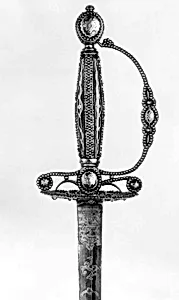
Smallsword
ca. 1780–85
Medium
Gold, steel
Dimensions
L. 39 in. (99.1 cm); L. of blade 32 3/16 in. (81.7 cm); Wt. 1 lb. (454 g)
Classification
Swords
Culture
British, probably London
Department
Arms and Armor
Museum
Metropolitan Museum of Art, New York, NY
Credit
Gift of Jean Jacques Reubell, in memory of his mother, Julia C. Coster, and of his wife, Adeline E. Post, both of New York City, 1926
Accession Number
26.145.311
Rights
Public Domain
Art Historical Context
Step into the elegant world of 18th-century gentlemen with this exquisite smallsword, crafted by the renowned London sword cutler John Bland around 1780–85. Measuring nearly 39 inches long with 32-inch steel blade, this weapon weighs just one pound, balancing lethal precision with refined luxury. Adorned in gold over steel, its hilt likely features intricate chasing or piercing—hallmarks of Bland's mastery—transforming a tool of defense into a status symbol for the aristocracy. Smallswords emerged in the late 17th century as the rapier's sleeker successor, favored for dueling, fencing, and formal dress in Georgian England. By the 1780s, they embodied Enlightenment ideals of civility and honor, often paired with embroidered suits at court or social events. This British example from London exemplifies the period's opulent arms trade, where goldwork elevated functionality to high art. A generous gift to the Metropolitan Museum of Art in 1926 from Jean Jacques Reubell, honoring his mother and wife, this piece now resides in the Arms and Armor department. It invites us to ponder how beauty and danger intertwined in everyday elite life.