
Smallsword
Unknown Artist
ca. 1720
Medium
Tortoiseshell, gold, silver, steel
Dimensions
L. 33 5/8 in. (85.4 cm); W. 4 in. (10.2 cm); D. 2 3/4 in. (7 cm); Wt. 12 oz. (340.2 g)
Classification
Swords
Culture
Western European, probably Naples
Department
Arms and Armor
Museum
Metropolitan Museum of Art, New York, NY
Credit
Gift of Jean Jacques Reubell, in memory of his mother, Julia C. Coster, and of his wife, Adeline E. Post, both of New York City, 1926
Accession Number
26.145.339
Rights
Public Domain
Art Historical Context
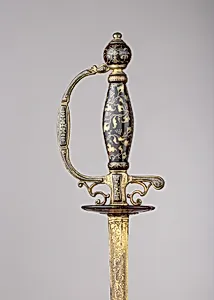
Step into the elegant world of 18th-century European aristocracy with this stunning smallsword, dating to around 1720 and likely crafted in Naples, a hub of refined Western European decorative arts. Smallswords like this one evolved from battlefield rapiers into lightweight, thrusting weapons ideal for dueling and as fashionable accessories for gentlemen. By the early 1700s, they symbolized social status, sophistication, and personal honor, often carried at court or in polite society. Crafted from steel for the blade, with a hilt of luxurious tortoiseshell inlaid with gold and silver, this piece showcases masterful techniques in piercing, chasing, and filigree work. The tortoiseshell—sourced from hawksbill sea turtles—provided a warm, glossy contrast to the shimmering metals, while its compact dimensions (33⅝ inches long, weighing just 12 ounces) made it both practical and wearable. Such opulent materials highlight the era's blend of functionality and artistry, turning a weapon into a jewel-like object. Now housed in the Metropolitan Museum of Art's Arms and Armor Department, this sword was a generous gift in 1926, preserving Naples' legacy of exquisite metalwork. It invites us to reflect on how beauty and lethality intertwined in the Baroque age.