
Smallsword
Unknown Artist
ca. 1650
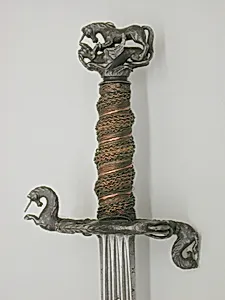
Medium
Steel, copper, leather, wood
Dimensions
L. 36 1/4 in. (92.1 cm); L. of blade 31 in. (78.7 cm); W. 4 1/2 in. (11.5 cm); D. 2 3/4 in. (7 cm); Wt. 1 lb. 5.5 oz. (609.5 g)
Classification
Swords
Culture
Dutch
Department
Arms and Armor
Museum
Metropolitan Museum of Art, New York, NY
Credit
Gift of Alan Rutherfurd Stuyvesant, 1953
Accession Number
53.216.5
Rights
Public Domain
Tags
Art Historical Context
This exquisite smallsword, crafted around 1650 in the Dutch Republic during its Golden Age of prosperity and naval power, exemplifies the transition from battlefield rapiers to refined civilian weapons. Worn by gentlemen for dueling, self-defense, and as a fashionable accessory, its slender steel blade—measuring 31 inches long—prioritizes thrusting precision over slashing, reflecting evolving combat styles amid Europe's age of exploration and conflict. The hilt, adorned with copper, leather-wrapped wood, combines functionality with subtle ornamentation, weighing just over a pound for agile handling. A standout feature is its unicorn motifs, likely etched or embossed on the fittings, evoking medieval heraldry where the mythical creature symbolized purity, strength, and nobility. In Dutch culture, such emblems blended Renaissance symbolism with emerging Baroque flair, turning a tool of war into a status symbol for the mercantile elite. At 36¼ inches overall, this piece from the Metropolitan Museum of Art's Arms and Armor collection (gift of Alan Rutherfurd Stuyvesant, 1953) invites visitors to appreciate the artistry in everyday arms of the era.