
Smallsword
Unknown Artist
1778
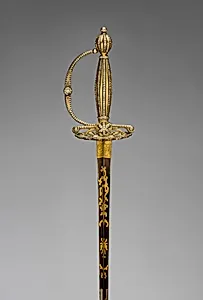
Medium
Steel, gold, silver, textile, paste jewels
Dimensions
L. 37 1/8 in. (94.3 cm); L. of blade 31 1/8 in. (79 cm); W. 4 in. (10.2 cm); D. 2 3/4 in. (7 cm); Wt. 12 oz. (340.2 g)
Classification
Swords
Culture
French
Department
Arms and Armor
Museum
Metropolitan Museum of Art, New York, NY
Credit
Gift of Jean Jacques Reubell, in memory of his mother, Julia C. Coster, and of his wife, Adeline E. Post, both of New York City, 1926
Accession Number
26.145.303
Rights
Public Domain
Art Historical Context
Step into the opulent world of 18-century France with this stunning smallsword from 1778, a of the Arms and Armor collection at the Metropolitan Museum of Art Crafted from steel for the blade, with lavish gold, silver, textile and paste jewel embellishments on the hilt, this weapon measures 37⅛ inches long and weighs a mere 12 ounces—light enough for agile dueling or daily wear. The intricate use of precious metals and faux gems highlights the era's rococo flair, where functionality met high fashion. Smallswords like this one emerged in the late 17th century as refined successors to heavier rapiers, becoming essential accessories for French gentlemen of the nobility and bourgeoisie. By 1778, on the eve of the French Revolution, they symbolized social status, elegance, and martial prowess, often carried to balls, theaters, or clandestine duels. The blade's 31⅛-inch length and narrow profile optimized thrusting techniques, while the ornate hilt—possibly featuring chased gold and woven textiles—showcased the goldsmith's artistry. Gifted to the Met in 1926 by Jean Jacques Reubell in memory of his mother and wife, this piece offers a tangible glimpse into pre-revolutionary aristocratic life, blending deadly precision with decorative splendor. A true fusion of form and function!