
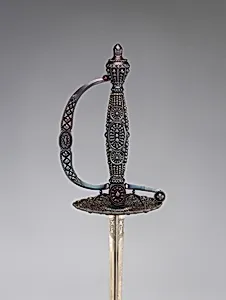
Smallsword, known as a Mourning Sword
Unknown Artist
ca. 1790
Medium
Steel, textile
Dimensions
L. 38 in. (96.5 cm); L. of blade 30 3/4 in. (78.1 cm); W. 4 3/4 in. (12.1 cm); D. 3 1/2 in. (8.9 cm); Wt. 15 oz. (425 g)
Classification
Swords
Culture
British
Department
Arms and Armor
Museum
Metropolitan Museum of Art, New York, NY
Credit
Gift of Jean Jacques Reubell, in memory of his mother, Julia C. Coster, and of his wife, Adeline E. Post, both of New York City, 1926
Accession Number
26.145.307
Rights
Public Domain
Art Historical Context
Step into the refined world of late 18th-century British's fashion with this striking *Smallsword, known as a Mourning Sword*ca. 1790). Crafted from steel with textile elements, this elegant weapon measures 38 inches overall, with a 30¾-inch blade, embodying the transition of swords from battlefield tools to symbols of social status and personal style. Worn by the elite as part of formal attire, smallswords featured slender, thrusting blades ideal for dueling or self-defense, their ornate hilts showcasing the owner's wealth and taste. The "mourning" designation hints at its poignant cultural role during times of grief, when black textiles—likely adorning the hilt—aligned with Victorian-era mourning customs that emphasized somber elegance even in accessories. Produced around the French Revolution's shadow, it reflects Britain's aristocratic poise amid political upheaval. Though by an unknown maker, its lightweight 15-ounce design (just under a pound) prioritized grace over brute force, underscoring the era's shift toward civility. Housed in the Metropolitan Museum of Art's Arms and Armor Department, this gift from Jean Jacques Reubell honors personal loss, mirroring the sword's own theme. A testament to craftsmanship and emotion, it invites reflection on how objects blended utility, artistry, and sentiment in Georgian Britain.