
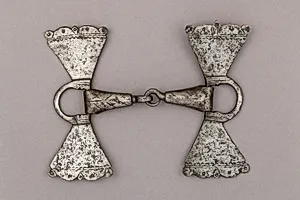
Snaffle Bit
Unknown Artist
late 16th century
Medium
Iron alloy
Dimensions
H. 7 1/4 in. (18.42 cm); W. 9 5/16 in. (23.65 cm).
Classification
Equestrian Equipment-Bits
Culture
German
Department
Arms and Armor
Museum
Metropolitan Museum of Art, New York, NY
Credit
Bashford Dean Memorial Collection, Bequest of Bashford Dean, 1928
Accession Number
29.150.155
Rights
Public Domain
Art Historical Context
Step into the world of Renaissance equestrian mastery with this late 16th-century Germanffle bit, a crafted piece of iron alloy now housed in the Metropolitan Museum Art's Arms and Armor. Measuring 7 1/4 inches high and 9 5/16 inches wide, this functional yet elegantly designed bit was essential for controlling horses, featuring a jointed mouthpiece that offered precise, milder leverage compared to harsher curb bits. As part of the Bashford Memorial Collection, bequeathed in 1928, it exemplifies the seamless blend of utility and artistry in everyday military and riding gear. In late 16th-century Germany, amid the tumult of religious wars and the rise of powerful cavalry forces, such bits were vital tools for knights, soldiers, and nobility. Horsemanship was a cornerstone of status and warfare, and German metalworkers were renowned for their robust iron alloys—forged, hammered, and tempered for durability under intense use. This snaffle bit highlights the period's advanced blacksmithing techniques, where strength met subtle design to ensure both horse welfare and rider command. Though by an unknown artist, its preservation reveals the cultural reverence for equestrian equipment, transforming a simple tool into a testament to Germanic ingenuity and the era's martial spirit. A closer look invites you to ponder the untold stories of the riders who once depended on it.