
Snubber for Bull
c. 1942
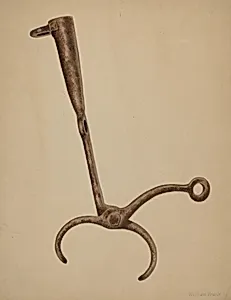
Medium
watercolor and graphite on paperboard
Dimensions
overall: 35.5 x 28.2 cm (14 x 11 1/8 in.) Original IAD Object: 12 1/2" high; 4 1/2" wide
Classification
Index of American Design
Department
CG-W
Museum
National Gallery of Art, Washington, D.C.
Credit
Index of American Design
Accession Number
1943.8.14201
Rights
Public Domain
Art Historical Context
"Snubber for Bull" is a meticulous rendering by artist William Frank, created around 1942 as part of the Index of American Design (IAD). This watercolor and graphite work on paperboard (35.5 x 28.2 cm) captures a utilitarian folk object—a bull snubber, a simple yet essential tool used by farmers to safely handle bulls by clamping onto the animal's nose. The original object, measuring just 12 1/2 inches high and 4 1/2 inches wide, exemplifies everyday American craftsmanship from rural life. Produced under the Federal Art Project of the Works Progress Administration (WPA) during the Great Depression, the IAD commissioned artists like Frank to document the nation's diverse decorative arts, crafts, and tools through detailed, colorful index cards. This piece preserves the snubber's functional form, highlighting its cultural role in agricultural traditions and the ingenuity of American makers. Frank's technique blends precise graphite outlines with vibrant watercolor washes, lending a lifelike quality that elevates a humble implement into art. Housed in the National Gallery of Art's collection, it invites visitors to appreciate how such records safeguard vanishing aspects of our shared heritage, bridging utility and aesthetics in mid-20th-century America.