
Snuff Bottle
Unknown Artist
Medium
Soft paste porcelain
Dimensions
H. 4 in. (10.2 cm)
Classification
Snuff Bottles
Culture & Period
China · Qing dynasty (1644–1911), Yongzheng period (1723–35)
Department
Asian Art
Museum
Metropolitan Museum of Art, New York, NY
Credit
Bequest of Benjamin Altman, 1913
Accession Number
14.40.583a, b
Rights
Public Domain
Tags
Art Historical Context
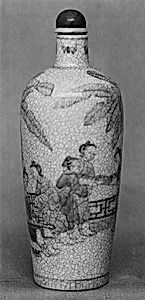
This exquisite snuff bottle, crafted in soft paste porcelain during China's Qing dynasty (1644–1911), the Yongzheng period (3–35), exemplifies the era's masterful porcelain artistry. Standing just 4 inches (10.2 cm) tall, these diminutive vessels were designed to hold powdered tobacco snuff, a luxury introduced via European trade and popularized among the Chinese elite. Adorned with human figures—likely depicting scenes from daily life or mythology—the bottle reflects the refined aesthetic of Yongzheng court porcelain, known for its delicate forms and subtle elegance. Soft paste porcelain, a transitional medium blending clay with glass frit, allowed for vibrant colors and intricate molding before the perfection of true hard-paste porcelain. Artisans achieved luminous glazes and fine details, making snuff bottles prized collectibles that blurred the line between utility and art. This piece, from the Metropolitan Museum of Art's Asian Art collection (Bequest of Benjamin Altman, 1913), highlights the technical innovation and cultural fusion of the time. Snuff bottles like this one offer a window into 18th-century Qing sophistication, where even the smallest objects embodied imperial taste and social status. Visitors, imagine slipping it into your sleeve for a discreet pinch— a testament to China's enduring tradition of miniature masterpieces!