
Snuff Bottle
Unknown Artist
19th century
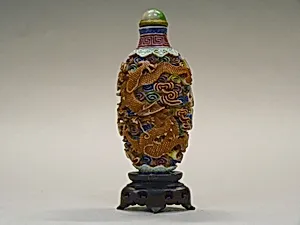
Medium
Porcelain with green jadeite stopper
Dimensions
H. 3 3/8 in. (8.6 cm)
Classification
Snuff Bottles
Culture & Period
China · Qing dynasty (1644–1911)
Department
Asian Art
Museum
Metropolitan Museum of Art, New York, NY
Credit
Bequest of Edmund C. Converse, 1921
Accession Number
21.175.367a, b
Rights
Public Domain
Tags
Art Historical Context
This delicate porcelain snuff bottle, crafted in China during the Qing dynasty (1644–1911), the refined artistry of 19th-century Asian luxury objects. Standing just 3⅜ inches (8.6 cm) tall, it features a vibrant green jadeite stopper, material prized for its luminous translucency and cultural associations with purity and immortality. Housed in the Metropolitan Museum of Art's Asian Department, it entered the collection through the 1921 bequest of Edmund C. Converse. Snuff bottles like this one were essential accessories for the Qing elite, used to carry finely ground tobacco snuff—a novel luxury introduced via trade with Europe in the 17th century. Porcelain, China's ancient innovation perfected over centuries, allowed for intricate designs, often decorated with auspicious motifs such as dragons, which symbolize imperial power, protection, and good fortune. These bottles blended functionality with miniature artistry, showcasing technical mastery in glazing and molding. Though the artist remains unknown, the bottle's elegant form highlights the Qing era's golden age of snuff bottle production, when thousands of variations emerged as collector's items. A charming window into imperial leisure and cross-cultural exchange, it invites visitors to ponder the intimate rituals of China's past.