
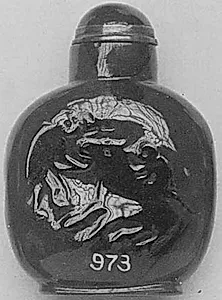
Snuff bottle with stopper
Unknown Artist
18th–19th century
Medium
Agate
Dimensions
H. 2 1/2 in. (6.4 cm)
Classification
Snuff Bottles
Culture & Period
China · Qing dynasty (1644–1911)
Department
Asian Art
Museum
Metropolitan Museum of Art, New York, NY
Credit
Gift of Heber R. Bishop, 1902
Accession Number
02.18.973a, b
Rights
Public Domain
Tags
Art Historical Context
This exquisite snuff bottle with stopper, crafted from agate during China's Qing dynasty (16441911), exemplifies the refined artistry of 18th–19th century luxury goods. Standing just 2½ inches (6.4 cm) tall, these vessels were designed for portability, allowing elites—particularly Manchu rulers, officials, and scholars—to carry and enjoy powdered tobacco snuff, a fashionable import from Europe introduced in the 17th century. Housed in the Metropolitan Museum of Art's Art Department as a gift from Heber. Bishop in 1902, it highlights the era's blend of practicality and opulence. Carved from translucent agate, a prized semi-precious stone valued for its durability and natural banding, the bottle features intricate motifs of horses and monkeys. Horses symbolized speed, success, and imperial power, while monkeys often evoked playfulness, cleverness, or auspicious folklore tales. Artisans skillfully exploited the stone's veining to enhance these lively scenes, showcasing lapidary techniques like incising and low-relief carving that demanded precision and patience. Snuff bottles like this were status symbols, collected avidly and exchanged as gifts, reflecting Qing connoisseurship. Their diminutive scale belies their cultural weight, bridging personal ritual with artistic mastery in everyday elite life.