
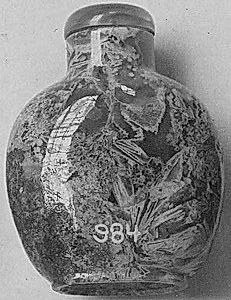
Snuff bottle with stopper
Unknown Artist
18th–19th century
Medium
Agate, mottled
Dimensions
H. 2 7/8 in. (7.3 cm)
Classification
Snuff Bottles
Culture & Period
China · Qing dynasty (1644–1911)
Department
Asian Art
Museum
Metropolitan Museum of Art, New York, NY
Credit
Gift of Heber R. Bishop, 1902
Accession Number
02.18.984a, b
Rights
Public Domain
Art Historical Context
This exquisite snuff bottle with stopper, crafted from mottled agate during China's Qing dynasty (16441911), exemplifies the refined artistry of 18th–19th luxury goods. Standing just 2 7/8 inches (7.3 cm) tall, its compact form was designed for portability, slipping easily into a gentleman's pocket or sleeve. Snuff bottles like this one were introduced to China by European traders in the 17th century and quickly evolved into coveted status symbols among the elite, blending functionality with aesthetic splendor. Made from agate—a semi-precious stone prized for its natural translucency and intricate mottled patterns—the bottle showcases the Qing era's mastery of hardstone carving. Artisans skillfully shaped the material to highlight its organic veining, often interpreting the patterns as auspicious landscapes or mythical scenes, though this example celebrates the stone's raw beauty. These bottles were not mere containers for powdered tobacco but miniature sculptures, collected by connoisseurs for their technical precision and visual poetry. A gift to the Metropolitan Museum of Art from Heber R. Bishop in 1902, this piece from the Asian Art department invites us to appreciate the Qing dynasty's fusion of everyday ritual and high art, where even the smallest object carried profound cultural weight.