
Snuffbox
ca. 1760–1800
Medium
Enameled copper
Dimensions
Overall: 1 3/8 × 2 7/16 × 1 7/8 in. (3.5 × 6.2 × 4.8 cm)
Classification
Enamels-Painted
Culture
British, Staffordshire
Department
European Sculpture and Decorative Arts
Museum
Metropolitan Museum of Art, New York, NY
Credit
Gift of J. Pierpont Morgan, 1917
Accession Number
17.190.1066
Rights
Public Domain
Tags
Art Historical Context
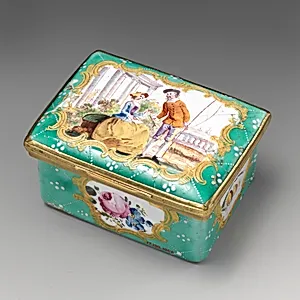
This exquisite snuffbox, crafted from enameled copper around 1760–1800, exemplifies the refined decorative arts of Georgian Britain. Measuring just over two inches wide, it was designed as a portable luxury for storing powdered tobacco, a fashionable habit among the elite. The painted enamel surface features delicate scenes of men and women amid floral motifs, showcasing the vibrant colors and intricate detailing made possible by the medium. Staffordshire, a hub for enamelwork, produced many such objects that blended utility with artistic expression. Though attributed to Jacopo Amigoni, an Italian artist celebrated for his elegant Rococo portraits, the piece reflects broader European influences on British decorative traditions. Enamel on copper allowed artists to achieve luminous, lasting images that rivaled miniature paintings, making these boxes cherished personal accessories and status symbols. Donated to the Metropolitan Museum by J. Pierpont Morgan in 1917, this snuffbox offers a glimpse into 18th-century social customs and the high level of craftsmanship in painted enamels. Its compact form and charming imagery continue to delight viewers with their blend of functionality and beauty.
About the Artist
Jacopo Amigoni · 1682–1752
A pioneer of the Venetian Rococo, Amigoni's oeuvre consists of decorative frescoes for churches and palaces, history and mythological paintings, and a few etchings. Comment on works: Religious; Mythology; Portraits