
山形奇石|Soaring Peak
Unknown Artist
18th century
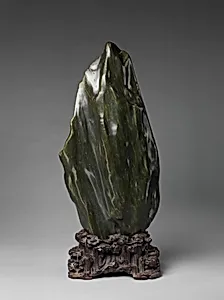
Medium
Sea-green hornblende with yellow markings; carved wood stand
Dimensions
Overall (with base): H. 28 1/2 in. (72.4 cm); W. 11 1/2 in. (29.2 cm); D. 7 1/4 in. (18.4 cm)
Classification
Sculpture
Culture & Period
China · Qing dynasty (1644–1911)
Department
Asian Art
Museum
Metropolitan Museum of Art, New York, NY
Credit
Gift of Richard Rosenblum Family, 2009
Accession Number
2009.512.2a–c
Rights
Public Domain
Art Historical Context
Behold *Soaring Peak* (山形奇石), a captivating 18th-century sculpture from Qing dynasty (16441911). Crafted lustrous sea-green hornblende—a mineral prized for its jade-like translucency and subtle yellow markings—this naturally evocative stone rises dramatically on a finely carved wooden stand. Measuring 28½ inches tall overall, it mimics the rugged majesty of a mountain peak, inviting viewers to ponder the harmony between nature and art. In Qing-era China, such *gongshi* (scholar's rocks) were treasured by literati and collectors for their ability to capture the sublime essence of landscapes in miniature. Displayed in studios or gardens, they symbolized the pursuit of tranquility and philosophical contemplation, echoing Daoist ideals of natural imperfection. The custom-carved stand elevates the stone, framing its contours to enhance its illusory depth and movement. This gift to the Metropolitan Museum of Art from the Richard Rosenblum Family exemplifies the enduring allure of Chinese rock art. Far from mere decoration, *Soaring Peak* transports us to mist-shrouded summits, reminding us of the artistry found in untouched geology refined by human discernment.