
Soup Dish
Unknown Artist
1815–30
Medium
Porcelain
Dimensions
H. 1 3/4 in. (4.4 cm); Diam. 9 1/4 in. (23.5 cm)
Classification
Soup dish
Culture
French
Department
The American Wing
Museum
Metropolitan Museum of Art, New York, NY
Credit
Gift of Mrs. Alan W. Carrick, 1967
Accession Number
Inst.67.15.32
Rights
Public Domain
Tags
Art Historical Context
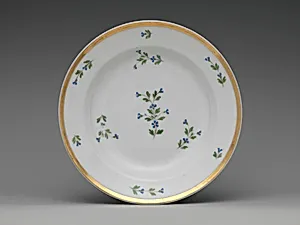
This delicate soup dish, crafted in porcelain around 1815–30, exemplifies the refined artistry of French ceramics during the Bourbon Restoration period. Measuring just 1¾ inches high and 9¼ inches in diameter, its shallow bowl and gently flared rim make it perfectly suited for elegant table service. Adorned with floral motifs—likely hand-painted or transfer-printed blossoms—the dish captures the era's neoclassical elegance blended with romantic naturalism, where flowers symbolized beauty and abundance in domestic luxury. French porcelain, produced at prestigious manufactories like Sèvres, was a hallmark of sophistication, often featuring intricate overglaze enameling and gilding techniques that showcased technical mastery and vibrant color retention. Exported widely, such pieces graced the tables of affluent households across Europe and America, reflecting the global trade in fine goods. Though the artist remains unknown, the dish's presence in The American Wing of the Metropolitan Museum of Art highlights its role in early 19th-century American life, where European imports elevated everyday dining into a display of taste and status. A generous gift from Mrs. Alan W. Carrick in 1967, this unassuming yet exquisite object invites us to appreciate the intersection of craftsmanship, commerce, and culture in a single, flower-kissed bowl.