
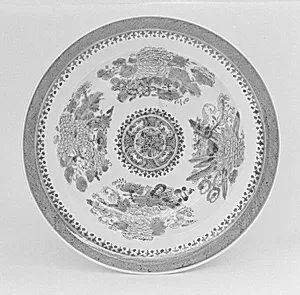
Soup plate
Unknown Artist
early 19th century
Medium
Hard-paste porcelain
Dimensions
Diameter: 9 3/4 in. (24.8 cm)
Classification
Ceramics-Porcelain-Export
Culture
Chinese, probably for American market
Department
European Sculpture and Decorative Arts
Museum
Metropolitan Museum of Art, New York, NY
Credit
Helena Woolworth McCann Collection, Gift of Winfield Foundation, 1951
Accession Number
51.86.80
Rights
Public Domain
Tags
Art Historical Context
This elegant soup plate, crafted in hard-paste porcelain by an unknown Chinese artist in the 19th century, the exquisite export wares produced for Western markets, particularly America. Measuring 9 3/4 inches in diameter, its delicate form and finely painted floral motifs—likely vibrant blossoms in the traditional Chinese style—transformed everyday dining into a display of refined taste. Hard-paste porcelain, prized its strength, translucency, pure white body, was a hallmark of Jingdezhen kilns, China's porcelain capital, enabling mass production of high-quality pieces for global trade. During the early 1800s, amid expanding maritime commerce, Chinese potters tailored designs to suit American preferences, blending Eastern artistry with Western functionality. These export ceramics flooded U.S. households via clipper ships, symbolizing status and the exotic allure of the Orient. Often used in formal table settings, this plate from the Helena Woolworth McCann Collection highlights how porcelain bridged cultures, gracing American tables while showcasing masterful techniques like underglaze cobalt blue and overglaze enamels for enduring color. Now housed in the Metropolitan Museum of Art's European Sculpture and Decorative Arts department, it invites us to appreciate the artistry in utilitarian objects—where floral elegance meets historical trade networks.