
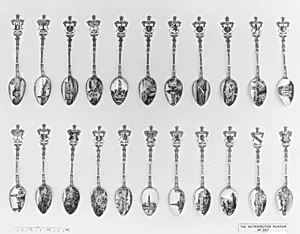
Souvenir spoon
Unknown Artist
late 19th century
Medium
Silver-gilt and enamel
Dimensions
Length: 5 in. (12.7 cm)
Classification
Metalwork-Silver
Culture
European
Department
European Sculpture and Decorative Arts
Museum
Metropolitan Museum of Art, New York, NY
Credit
Gift of Sir William H. Redding, in memory of his wife, 1908
Accession Number
08.245.76
Rights
Public Domain
Tags
Art Historical Context
This delicate **Souvenir Spoon**, crafted in the late 19th century by an unknown European artist, exemplifies the exquisite metalwork of its era. Measuring just 5 inches (12.7 cm) in length, it is fashioned from silver-gilt—a luxurious technique where a thin layer of gold is applied over silver for a radiant, durable finish—and enriched with vibrant enamel decorations. The tags hint at motifs of buildings and coats of arms adorning its handle or bowl, likely commemorating a cherished European landmark or noble lineage, blending architectural pride with heraldic symbolism. Souvenir spoons surged in popularity during the late 1800s amid the rise of grand tourism across Europe, fueled by railroads and steamships. These petite treasures served as affordable mementos for travelers, showcasing regional identities through intricate chasing, enameling, and gilding. The enamel work, fired onto the metal for glossy, jewel-like colors, highlights the technical mastery of decorative arts workshops, transforming everyday silver into portable art. Generously gifted to the Metropolitan Museum of Art in 1908 by Sir William H. Redding in memory of his wife, this piece now resides in the European Sculpture and Decorative Arts department. It invites visitors to ponder the intimate joys of Victorian-era travel and the enduring allure of personalized heirlooms. (198 words)