
Spartan Basalt Lentoid
Unknown Artist
ca. 1400–1375 BCE
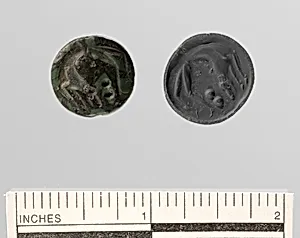
Medium
Spartan basalt
Dimensions
Diam.: 5/8 in. (1.6 cm)
Classification
Gems
Culture & Period
Minoan · Late Minoan IIIA
Department
Greek and Roman Art
Museum
Metropolitan Museum of Art, New York, NY
Credit
Bequest of Richard B. Seager, 1926
Accession Number
26.31.243
Rights
Public Domain
Tags
Art Historical Context
This exquisite *Spartan Basaltoid*, dating to ca. 1400–1375 BCE, is a tiny masterpiece of Minoan artistry from the Late MinoanA period. Measuring just 5/8 inch (1.6 cm) in diameter, this biconvex gem—shaped like a lentil—was carved from durable Spartan basalt, a stone sourced from the Greek mainland and prized for its fine grain ideal for intricate engraving. Likely an intaglio seal or amulet, it features motifs of shields and male figures, evoking the martial world of Bronze Age warriors, a common theme in Minoan glyptic art. Crafted by an unknown Minoan artisan, the lentoid exemplifies the period's mastery of micro-scale sculpture. Using simple tools, artists achieved remarkable detail on these seals, which served practical purposes like authenticating documents or as personal talismans. The depiction of shields and men reflects Minoan society's blend of elite status symbols and defensive iconography, possibly alluding to Mycenaean influences creeping into Cretan culture amid the decline of grand palaces like Knossos. Housed in the Metropolitan Museum of Art's Greek and Roman Art Department through the 1926 bequest of Richard B. Seager, this gem offers a window into the vibrant, seafaring Minoan civilization—Europe's first advanced culture—reminding us how even the smallest objects encapsulate a world's power and piety.